
Captain, Drop the Shields!
Mike Ramm

“There is nothing either good or bad, but thinking makes it so.” William Shakespeare, Hamlet
The Enterprise is being torn apart. Intermittent pulses of a mysterious energy are pounding the ship. All along Captain Picard has been ordering the bridge crew to divert more and more power from the ship’s critical systems to the deflector shields, but each energy wave is exponentially more destructive than the one before. The next wave, seconds away from impact, will doom the Enterprise! That’s when Lieutenant Commander Data, the android, figures it out. Data suddenly understands that the more power the crew diverts to the shields, the more powerful the wave becomes. “Captain, drop the shields!” he implores Picard as the unsurvivable wave is about to hit. “But that’s suicide,” insists Commander Ryker, the first officer. “Make it so!” the captain orders. The bridge crew drops the shields, and the impact of what moments earlier was the wave of doom now causes barely a ripple as it passes gently over the ship.

Consider this scene from Star Trek: The Next Generation as an analogy. (Admittedly, I’m a Trekkie, but that’s beside the point.) Let the shields represent one’s negative emotions: defensiveness, say, or resentment, but especially anger. Let the energy waves represent whatever it is in our day to day lives that is provoking those negative emotions. Let Data’s insistence on dropping the shields represent an essential aspect of Stoic philosophy.
Most people think of a Stoic as one who keeps his or her composure in the face of difficult life situations, which is true, but that’s only scratching the surface of what the school of Stoicism teaches. I mean, it’s easy to say to yourself or others to keep a stiff upper lip. The Stoics actually instruct us how it’s done.
"If someone succeeds in provoking you,” writes the ancient Greek philosopher Epictetus, “realize that your mind is complicit in the provocation. It is not their words or actions that disturb you, but your willingness to be disturbed." Now Epictetus isn’t suggesting that you suppress your negative emotions. Rather the goal is to discipline yourself not to express them. Experience has taught the Stoic that defensive posturing and snarky comebacks–our deflector shields–only serve to escalate and inflame the situation. Have you ever known a heated argument to lead to a constructive outcome? Perhaps. But once the argument subsides, don’t we tend to regret our words or at least our tone of voice? Don’t we usually end up apologizing? “Anger,” said Seneca, a Roman Stoic philosopher, “is a brief insanity, and the damage done by anger is enormous.” So drop the shields. Let the provocation be a ripple rather than a tidal wave.

Another captain comes to mind. Captain Ahab. You know his story. Moby Dick mightily provokes Ahab by biting off his leg. Ahab vows vengeance! He vows to, and I’m quoting the book here, “dismember his dismemberer.” Angry Ahab orders his ship, the Pequod, to hunt and kill the White Whale, a quest that ends in the violent deaths of the captain and all but one of the crew. It didn’t have to be this way. If only Captain Ahab had been a Stoic, or at least had kept a Stoic at his side to help him process his adversity, then things wouldn’t have turned out so badly. When I read Herman Melville’s Moby Dick in college, I was surprised to learn Ahab actually does encounter a Stoic during the voyage. His name is Captain Boomer and, like Ahab, he commands a whaling ship, the Samuel Enderby. The Pequod and the Samuel Enderby meet on the high seas, and Ahab, hoping to learn the whereabouts of Moby Dick, comes on board the Samuel Enderby for a captain to captain talk. Surprise, surprise, Captain Boomer not only attempted to harpoon the White Whale one year prior, but was also dismembered in the attempt, losing an arm. Captain Boomer, however, isn’t on a quest for vengeance. He hasn’t become, to quote the book again, “madness maddened.” Had Ahab listened to his fellow captain the way Picard listens to Data, then Moby Dick would’ve been more travelogue than tragedy. More on Captain Boomer later.

One way to keep life from provoking you, the Stoics teach, is to reframe the situation so as to see it from a less angry, less fearful perspective. “It is not things that disturb us,” Epictetus said, “but our view of them.” A few years ago my sister and I were talking on her front porch when we heard the nearby siren of an emergency vehicle. “I hate the sound of sirens,” I said. “It can only mean that someone is in trouble.” To which my wise sister responded, “It also means that someone is getting the help they need.” That’s Stoicism. When I asked my former colleague what it was like to teach during the pandemic, he said, “This year has been a Where’s Waldo book of silver linings.” That’s Stoicism. A friend of mine quotes his dying father-in-law who said, “My earth-suit is wearing out.” That, too, is Stoicism. And Captain Boomer, like a good Stoic, is also able to reframe his adversity. Ahab is convinced that Moby Dick acts out of malice. Captain Boomer chooses to see his own dismemberment differently. Whereas Ahab sees Moby Dick’s malicious intention, Captain Boomer chooses to see only the White Whale’s “awkwardness.” Ahab’s perspective leads to madness. Captain Boomer’s to recovery.
The Stoics also place a lot of value on humor as a way to cope with the slings and arrows of outrageous fortune. “It is more fitting for a man to laugh at life,” writes Seneca, “than to lament over it.” Captain Boomer jokes a lot during his conversation with Ahab. First he makes fun of the Samuel Enderby’s doctor. According to Captain Boomer, after Moby Dick took off his arm, the ship’s doctor treated him by, “drinking hot rum toddies with me every night, till he couldn’t see to put on the bandages.” Then he speaks good humoredly of Moby Dick. “He’s welcome to the arm he has, since I can’t help it…No more White Whales for me; I’ve lowered for him once and that has satisfied me.”
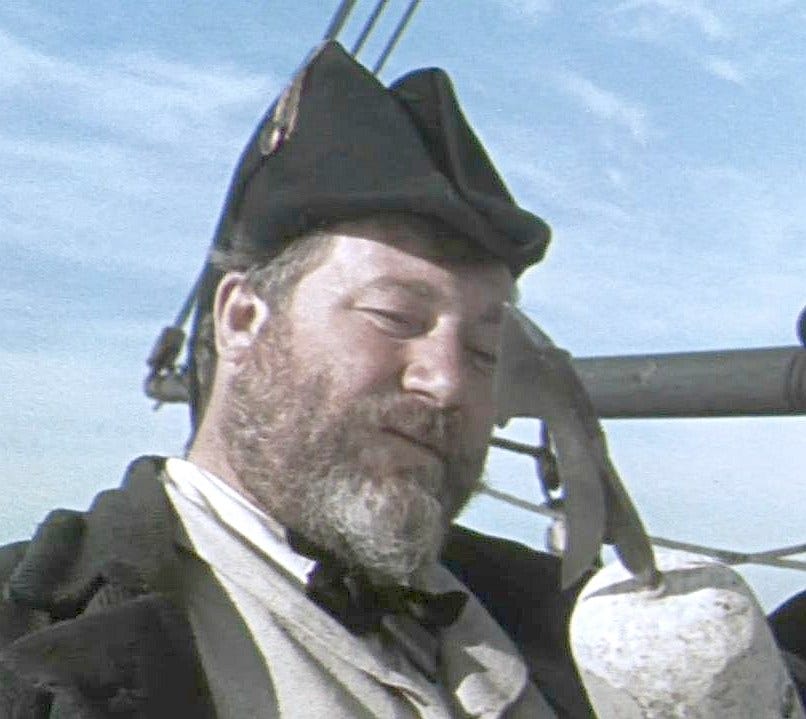
“SINCE I CAN’T HELP IT.” More than anything Stoicism emphasizes discerning what is and what isn’t in one’s control. Epictetus wrote, “The chief task in life is simply this: to identify and separate matters so that I can say clearly to myself which are externals not under my control, and which have to do with the choices I actually control. Where then do I look for good and evil? Not uncontrollable externals, but within myself to the choices that are my own.” Captain Boomer succeeds at this chief task and is saved. Ahab doesn’t and is destroyed.
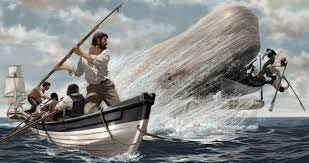
In a sense, a high school teacher is the captain of the classroom, and, ideally, students follow his directives. Recall how the English teacher in the film Dead Poets Society, Mr. Keating, played by Robin Williams, half seriously suggests his students call him O Captain, My Captain. But what happens when students don’t follow those directives? What kind of captain will the teacher then be? Will he be a Captain Picard who responds to the provocation by following standard operating procedure (at least initially), raising and strengthening the shields thereby keeping the student(s) at an emotional distance? Will he be a Captain Ahab who responds with stern discipline, lashing out at the student(s) and imposing punishments disproportionate to the offense? Or will he be a Captain Boomer, the Stoic, who doesn’t take the provocation personally, dealing with the situation in a way–humorously if appropriate–that doesn’t escalate the tension and doesn’t alienate the student(s) who are doing the provoking?
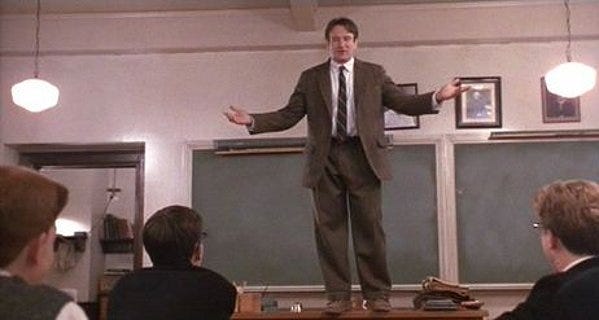
Well, when I was a student teacher I got my answer, and to this day I regret how I treated the student who, as I saw it then, had made a mockery of my “authority.” In my defense all I can say is that a student teacher feels like the most judged person in the world. The credential program advisor is judging him. The master teacher whose class he’s taken over is judging him. And, of course, the students are judging him. Also, a student teacher is told that he shouldn’t smile at his students for three weeks after taking over the class. Smiling is a sign of vulnerability. Captains, after all, do not smile at crew members.
The students I wasn’t supposed to smile at were sophomores, mostly boys, and everything I tried in that class had fallen flat or failed altogether. They had hated English to begin with, and clearly I had no clue what I was doing, so they mostly ignored me. Desperate to engage these kids, I chose out of a handbook an activity entitled Giving Precise and Specific Directions. First, I gave every student a penny. Second, I informed students that the teacher standing at the blackboard, chalk in hand, was now a programmable robot. Third, I directed students to program the robot to draw Lincoln’s profile, using the image on the penny as a model.
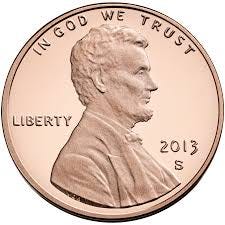
Grudgingly, a few students gave it a try. “Draw a circle,” came the first command. I drew an enormous circle. “No, smaller.” I drew a miniscule circle and reminded them that this was an exercise in giving precise, specific directions. “OK, make the circle twice the size of the clock on the wall.” Then things started to click. Several students directed me to draw lines with specific lengths and precise orientations. An image, as of yet unrecognizable, began to appear within the circle. Doug, the smartest and most engaged kid in the class, was downright enthusiastic. His enthusiasm was contagious, which is why I didn’t mind him talking (turns out he was conspiring) with classmates as he continued programming the teacher. Suddenly, wonderfully, a good portion of the class began contributing. They kept shouting out commands, and I kept drawing, so happy with my first ever success in the classroom that I couldn’t help but smile. Except…except…what was appearing on the blackboard in no way resembled Lincoln’s profile. It looked like, well, an outline of Florida, a droopy appendage dangling down from…
I saw it then. I saw what it was that I was being programmed to draw. Students weren't programming me to draw Lincoln’s profile. Neither were they programming me to draw Lincoln’s face. The fact of the matter was that in my directions I hadn’t used the words “profile” or “face.” Program the robot to draw Lincoln’s head is what I had told them. Must I say it? That “head” is slang for male genitalia? Yep! I had been duped into drawing a penis. The class was laughing at me now, laughing at my alarmed expression, laughing, too, at the panicky way I erased the board. I should have laughed along with them. Sadly, I wasn’t a Stoic. Just a terribly insecure student teacher.
Had I been a Stoic I would’ve understood that I had no control over the class’s laughter but only my response to it. I would’ve known that any overreaction on my part would exponentially amplify the volume and intensity of their laughter. Had I been a Stoic, I would’ve chosen to see the humor in the situation, laughing at rather than lamenting what was undeniably a very funny prank. Had I been a Stoic, I would’ve also chosen to reframe the situation, transforming the provocation into a teachable moment. Ironically, this was an exercise in giving precise, specific directions, and my choice of words left too much room for interpretation. Doug, the instigator, had taken advantage of the ambiguity, and had I been a Stoic, I would’ve chosen to praise him for it. Instead I harpooned him.
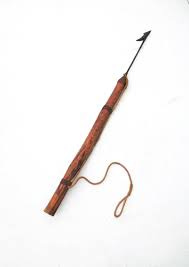
Furious, I sent him to the office. On the referral I wrote that Doug had sabotaged my classroom activity, intentionally disrupting the learning process. I don’t remember how or even if the vice principal punished him for tricking the student teacher into drawing a penis on the blackboard. I do remember that Doug never again raised his hand in class. It didn't have to be this way. If only I had been a Stoic. If only I had dropped the shields.

Even better, here’s Picard quoting from Moby Dick in the film Star Trek: First Contact
With this blog, you have masterfully presented us with much food for thought. You’ve managed to put into words vivid examples of lessons I’ve struggled a lifetime to learn. I have a feeling I’m going to be returning it to multiple times when I need a kick in the butt. Just so you know, this blog started a lively and positive conversation in our household this morning.
What an education that was! Thank you. My understanding of Stoicism was about a deep as your first description. C. Hickson