
DARK SKIES
By Jim Hickson.
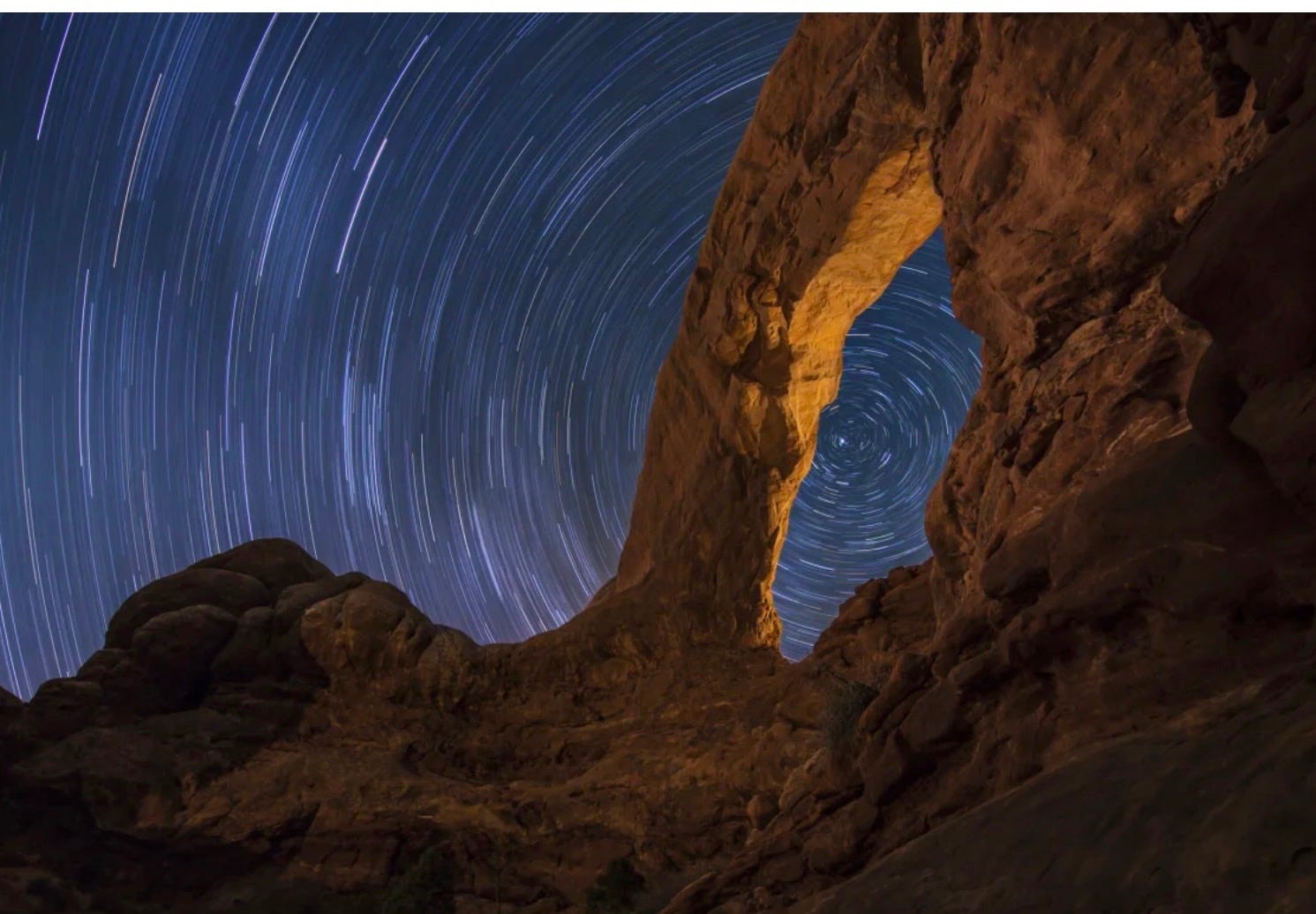
I came across a news article recently that intrigued me. Nevada City, which we visit frequently, announced it is applying for and in the process of becoming a “dark sky community.” If it succeeds it will be only the second community recognized in California (the first is Borrego Springs). Of course I have heard of dark sky areas before and have seen signs announcing them, but I’ve never really dove into the purpose and organization behind the designations.
In 1978 Robert Pyle, a biologist, educator and writer coined the term “nature connectiveness.” His article in the journal ‘Earth’ described the gradual loss of humanities’ connection to the natural world. Part of that loss is the result of light pollution.
80% of the people in the United States cannot see the Milky Way. Almost half the people in the world have poor night sky visibility. It is estimated that night skies become nearly 10% brighter each year, i.e. stars become 10% less visible. A moderately dark backyard may have 300 stars visible. A dark sky yard will contain over 3,000.
The results of losing night visibility are, to say the least, harmful to inhabitants of our planet. Nesting sea turtles cannot navigate to desired sites. Birds get drawn off their migratory routes; an estimated 1 billion crash into building. Bats, butterflies and salmon are among many species threatened by light pollution.
A 2017 study found that of nocturnal animals 30% of vertebrates and 60% of invertebrates are in jeopardy of sustaining their viability by the increase of light pollution which is now even linked to obesity, depression, and sleep disorders in humans.
The Dark Sky Association (now called Dark Sky International or “DSI”) was founded in 1988 by an astronomer and a physician to raise awareness of the value of dark, star-filled night skies and encourage their protection and restoration. Today 22 countries support communities and nature reserves with official accreditation. “Astrotourism” is now an accepted term for the tourists who hope for a star-studded future.
DSI organizes dark Sky areas into 4 categories.
“Communities” are towns committed to reducing light pollution through legally binding public policies.
“Parks” are public areas that are recognized as minimizing light pollution by working with local agencies and governments with initiatives and ordinances to promote darkened skies. The Milky Way must be visible for a park to be certified. Most U.S. National Parks such as the Grand Canyon, Arches and Great Basin qualify.
“Reserves (or Preserves)” are dark core zones surrounded by a populated periphery where policies control the darkness of the core. Greater Big Bend Dark Sky Reserve with its 9 million acres is the largest dark sky place in the world. Death Valley National Park is also a famous reserve where it is said to have visible shadows cast by the Milky Way.
The final category is the most exceptional and distinguished of all. These remote areas are called “dark sky sanctuaries.” Cosmic Campground in New Mexico was the 1st dark sky sanctuary in the world. The Oregon Outback Sanctuary at 2.5 million acres is the world’s largest. The darkest of them all is the Atacamba Desert in Chile, the driest non-polar desert in the world at 8,000 feet with incredibly clear skies.
I became interested in astronomy when at 12 as I was gifted a small telescope. A decade later a class in astronomy at Santa Barbara City College fueled my amateur fascination. For 30 years I enjoyed reading Sky and Telescope magazine at the Auburn Library.
I am fortunate to have visited many of the dark sky places I have mentioned, particularly the Oregon Outback while on a 5 day float trip down the Owyhee River. Of course there are many other spots on earth where one can enjoy the heavens on a moonless night.
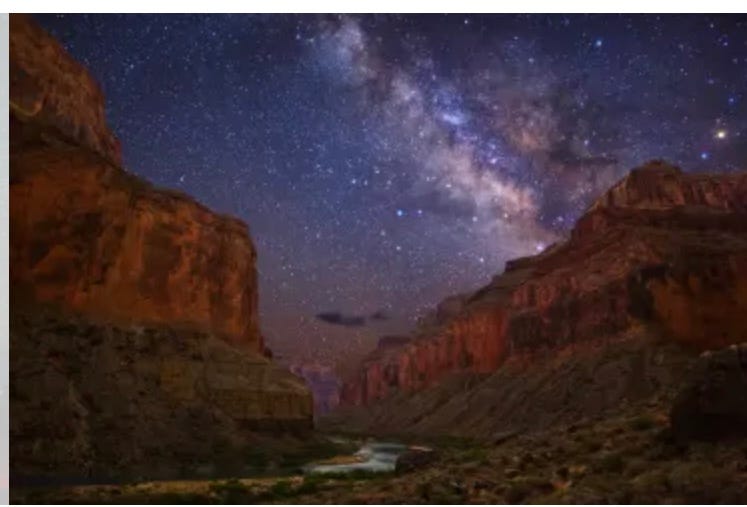
Owyhee River Canyon
A particular memory for me was camping at 10,000 feet above Columbine Lake in the Sierra Nevada. It was a clear, dry and moonless night. Starlight woke me up in the early hours, so bright I believed I could read by them. I’ve also visited the Maunakea Observatory on the summit of Mauna Kea in Hawaii. A typical inversion layer below its 13,800 foot summit makes it the most scientifically productive site for astronomy in the world. The evening we visited a full moon rose and lit up the 13 observatories. The silver one from Cal Tech rotated silently and slowly opened its dome. Moonlight did not bother it that night as its telescope was searching for radio waves.
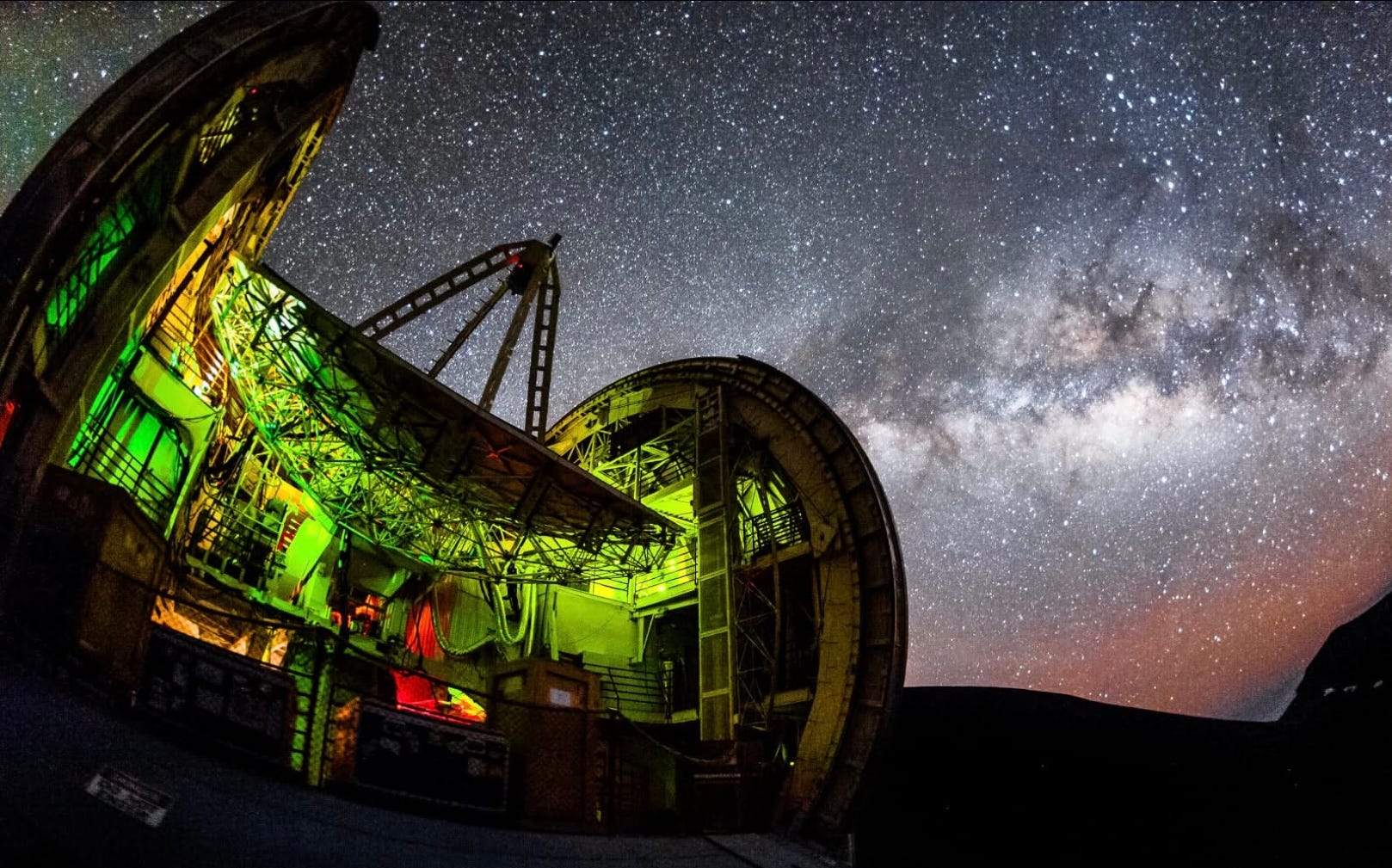
Cal Tech Observatory on Mauna Kea
With normal 10x50 binoculars one can see about 100,000 stars. One faint smudge may be the Andromeda Galaxy, the Milky Way’s nearest neighbor, whose distance of 2.5+ million light years is hard to fathom. Nearly inconceivable is that astronomers estimate that the universe contains upwards of 3 trillion galaxies with about 100 billion stars in each. The few stars we can see with our naked eye, the closest of which is called Proxima Censura (4.24 light years away), contain but a tiny fragment within one arm of our Milky Way.
Let’s marvel at our star-studded dark skies, for (to paraphrase Carl Sagan): we are all made of stardust.
Meh, you want tourist dark sky zones?
North Korea comes to mind but the super dark sky vacation place is Afghanistan.
Fun read. Deep thoughts. Somewhere in my past memories is a satellite image in a National Geographic magazine from decades ago still stuck in my brain showing the areas of dark and light as mapped out across the United States. Some of the darkest zones were isolated regions of dessert, prairie, mountains of the country found essentially in the more middle zones. The northern east coast with major cities and southern west coast were some of the most luminous images from that memorable photo. Now that I think about it, I suspect a quick internet search might discover such satellite data rich images found.
I live just outside Davis, California and the college town has had an agenda over the years to reduce lighting that lights the sky. Downward only lights are a popular lighting option in that city. Of course, in Woodland and Sacramento, where I busy myself throughout the week, I'm always shocked at the recent transformation of ever bright lights being used, attached to buildings outside - the goal, to expose and limit adjacent properties to be used by the homeless. I suspect that if there are ways to measure the number of lumens cast by these shockingly bright lights used most recently to ward off "camping" near schools, warehouses, grocery stores, and general Box businesses, we'd see sad reveals in the increase of light pollution of the past decade added.